Trump declares foreign robot imports a national security threat
The president orders trade talks on industrial robots, warning of tariffs if agreements fail within 180 days.
Key points
- Trump issued a proclamation on October 28 declaring foreign factory robots a national security risk.
- A Commerce Department investigation cited cybersecurity vulnerabilities and risks to the US industrial base.
- US companies face potential tariffs, duties, or quotas if no trade agreements are reached in six months.
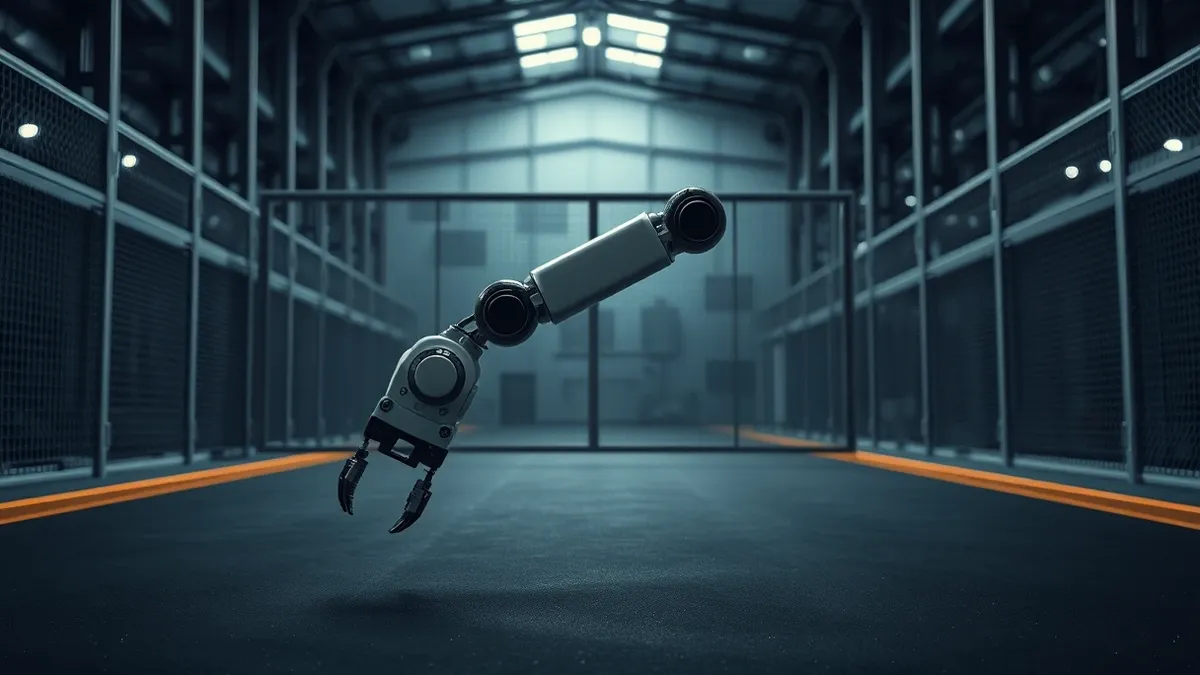
President Donald Trump issued a presidential proclamation on October 28 declaring that imports of foreign-made factory robots constitute a national security threat to the United States.reported According to Ars Technica, this order initiates new negotiations with trading partners while threatening future tariffs on these specific industrial imports.reported
The announcement
The directive requires the US and its trading partners to adjust imports of robotics, industrial machinery, and components within 180 days of the proclamation.reported Ars Technica reports that if no agreements are reached by that deadline, the president may impose tariffs, duties, quotas, and fees.reported These costs would be borne directly by US companies importing the equipment.
The context
The proclamation cites an investigation by US Secretary of Commerce Howard Lutnick, which found that US imports of such robots pose risks to the industrial base and threaten long-term competitiveness. The investigation also identified unique security and safety risks, including significant cybersecurity vulnerabilities that could result in severe consequences.
Reading between the lines
This action expands scrutiny beyond previous restrictions. In July 2026, the FCC banned new models of foreign-made consumer robots, such as vacuum cleaners and humanoid robots, but exempted industrial robot arms.reported Ars Technica notes that the new proclamation targets the industrial machinery previously exempted from those consumer-focused bans.
The business case
Major US manufacturers face immediate operational uncertainty. Ars Technica identifies Detroit automakers General Motors and Ford, electric vehicle maker Tesla, and aerospace giants Boeing and Lockheed Martin as companies relying on such robots. The potential for new tariffs means these firms could see increased capital expenditures for manufacturing equipment if trade talks fail to produce exemptions or lower-cost agreements within the 180-day window.reported
Why it matters
- Platform architects must assess supply chain risks for industrial AI hardware, as tariffs could raise costs for robotics infrastructure.
- The cited cybersecurity vulnerabilities suggest new compliance requirements for integrating foreign-made industrial robots into critical infrastructure.
- Companies like Tesla and GM may alter vendor choices, potentially favoring domestic manufacturers to avoid trade friction.
- The 180-day negotiation window creates a period of budgetary uncertainty for capital planning in manufacturing sectors.
Topics: industrial robots, national security, tariffs, supply chain, manufacturing
Updated
Ask the article
Local keyword search of this article; no generated answers.Did this article give you the evidence you needed?
Your choice stays on this device. No public tally.Questions readers ask
Which companies are affected by this proclamation?
Ars Technica reports that General Motors, Ford, Tesla, Boeing, and Lockheed Martin are among the US corporations relying on imported industrial robots.
What is the deadline for trade agreements?
The proclamation aims to strike new agreements within 180 days of the October 28 issuance date.
Are consumer robots included in this new order?
The proclamation focuses on industrial robots and machinery; previous FCC bans covered consumer models like robotic vacuums and humanoid robots.
Connected stories
Reading receipt
- Trump issued a proclamation on October 28 declaring foreign factory robots a national security risk.
- A Commerce Department investigation cited cybersecurity vulnerabilities and risks to the US industrial base.
- US companies face potential tariffs, duties, or quotas if no trade agreements are reached in six months.