Does Nvidia Vera CPU Outperform x86 Rivals in Agentic AI Workloads?
Tom’s Hardware benchmarks show Nvidia’s new standalone data center CPU delivering strong Python and memory results against Intel and AMD chips.
Key points
- Nvidia’s Vera CPU shows chart-topping Python performance in independent testing.
- The chip offers up to 1.2 TB/s aggregate memory bandwidth.
- Vera matches or beats AMD Turin and Intel Granite Rapids-AP in backend tasks.
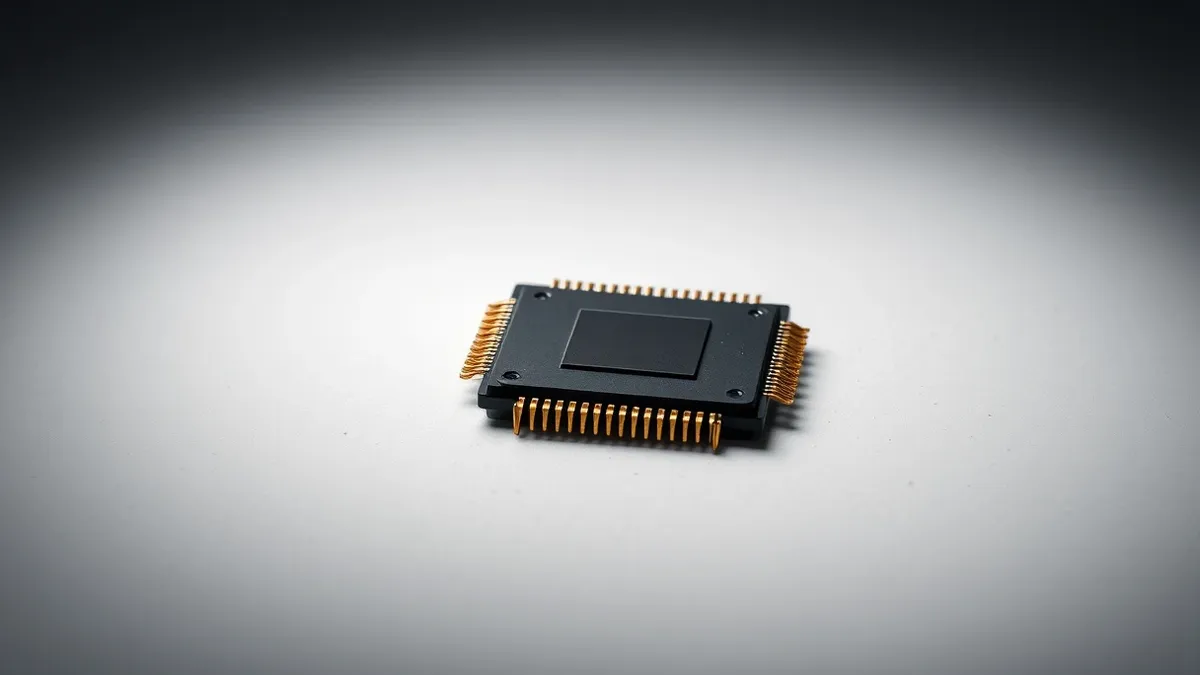
Tom’s Hardware published benchmark results for Nvidia’s standalone Vera data center CPU, comparing it against Intel’s Granite Rapids-AP and AMD’s EPYC Turin processors. The outlet reported that Vera demonstrates strong performance indicators for agentic workflows, particularly in Python execution and memory bandwidth.reportedNvidia’s new Vera processor shows strong results in tests comparing it to chips from Intel and AMD.Independent benchmarks highlight Vera’s superior Python throughput and memory bandwidth relative to Granite Rapids-AP and EPYC Turin.
Evidence: reported
Benchmarking Nvidia’s Vera CPU for the data center — standalone Vera tested against Granite Rapids-AP and EPYC Turinaifleet-tomshardware
The announcement
Nvidia provided access to its Vera CPU for testing, marking a significant step in its AI infrastructure strategy. The processor features an 88-core design built on the Armv9.2-A architecture. It utilizes Nvidia’s custom Olympus core, which represents a stark improvement over the off-the-shelf Arm design used in the previous Grace processor.
The context
The Vera CPU supports two threads per core through Nvidia’s spatial multithreading technology. It delivers up to 1.2 TB/s of aggregate memory bandwidth, equating to 14 GB/s per core. The chip includes 88 PCIe 6.4 lanes for CPU-only configurations and 96 lanes when paired with Vera Rubin, supporting bifurcation down to x2 and CXL 3.1.reported
Evidence: reported
Benchmarking Nvidia’s Vera CPU for the data center — standalone Vera tested against Granite Rapids-AP and EPYC Turinaifleet-tomshardware
Reading between the lines
Tom’s Hardware noted that while no standardized end-to-end agentic benchmarks currently exist for CPUs, Vera’s performance in Python is critical because Python forms much of the AI software ecosystem backbone. The high-speed C2C interconnect between Vera chips provides commanding memory bandwidth, which the outlet stated is critical for agents querying large databases in contentious environments.reported
Evidence: reported
Benchmarking Nvidia’s Vera CPU for the data center — standalone Vera tested against Granite Rapids-AP and EPYC Turinaifleet-tomshardware
The business case
Vera enters a contested server market where custom Arm chips are penetrating data centers alongside established x86 offerings from AMD and Intel. according to the published report, Vera offers competent general-purpose server performance, often matching or beating comparable x86 chips.reported While x86 CPUs often win in frontend workloads due to core density, Vera trades that density for strong performance in backend, data-rich operations.reported
Evidence: reported
Benchmarking Nvidia’s Vera CPU for the data center — standalone Vera tested against Granite Rapids-AP and EPYC Turinaifleet-tomshardware
Evidence: reported
Benchmarking Nvidia’s Vera CPU for the data center — standalone Vera tested against Granite Rapids-AP and EPYC Turinaifleet-tomshardware
Why it matters
- Architects can leverage Vera’s high memory bandwidth for data-heavy agentic workflows that query large databases.
- The custom Olympus core suggests Nvidia is moving beyond off-the-shelf Arm designs for better performance control.
- Competing with Intel and AMD requires balancing core density against backend operational strength.
- Python performance remains a key metric for AI infrastructure selection given its ecosystem dominance.
Topics: Nvidia, CPU, benchmarks, Arm, data center
Updated
Then / now / next
Nvidia used off-the-shelf Arm core designs in its Grace processor for data center applications.
The new Vera CPU uses a custom Olympus core with improved benchmarks in Python and memory.
Watch for standardized end-to-end agentic CPU benchmarks to validate current performance claims.
Story timeline
- Then Nvidia used off-the-shelf Arm core designs in its Grace processor for data center applications.
- 30 Oct 2026 Benchmarking Nvidia’s Vera CPU for the data center — standalone Vera tested against Granite Rapids-AP and EPYC Turin
- Now The new Vera CPU uses a custom Olympus core with improved benchmarks in Python and memory.
- Next Watch for standardized end-to-end agentic CPU benchmarks to validate current performance claims.
The strongest doubt
Counterpoint from the sources
Tom’s Hardware cautioned that the claim of designing a CPU for a demand shift that arose only six months ago is reaching, and noted the lack of standardized agentic benchmarks.
For readers
Researchers
- Python performance is critical as it forms the backbone of the AI software ecosystem.
Developers
- High memory bandwidth supports agents querying large databases in contentious environments.
Investors
- Nvidia enters a hotly contested server market against established x86 vendors AMD and Intel.
Ask the article
Local keyword search of this article; no generated answers.Did this article give you the evidence you needed?
Your choice stays on this device. No public tally.Terms in this story
Olympus core
Nvidia’s first custom CPU core design, replacing off-the-shelf Arm cores.
Spatial multithreading
A technology allowing two threads per core on the Vera CPU.
C2C interconnect
High-speed connection between Vera chips enabling commanding memory bandwidth.
Armv9.2-A
The architecture standard underlying the 88-core Vera CPU design.
Questions readers ask
How does Vera’s memory bandwidth compare to previous designs?
according to the published report, Vera offers up to 1.2 TB/s aggregate bandwidth, a significant improvement over the Grace processor.
What architecture does the Vera CPU use?
The 88-core CPU is built on the Armv9.2-A architecture with Nvidia’s spatial multithreading for two threads per core.
Does Vera perform well in general server tasks?
Yes, the outlet noted it often matches or beats AMD Turin and Intel Granite Rapids-AP in backend operations.
Connected stories
Reading receipt
- Nvidia’s Vera CPU shows chart-topping Python performance in independent testing.
- The chip offers up to 1.2 TB/s aggregate memory bandwidth.
- Vera matches or beats AMD Turin and Intel Granite Rapids-AP in backend tasks.
Still open: Will standardized end-to-end agentic CPU benchmarks emerge to validate these findings?
Still open: How will custom Arm chip adoption impact the broader data center server market?