Can PsiQuantum’s 1.2 dB Optical Switch Cut AI Data Center Power Costs?
PsiQuantum demos a low-loss silicon photonic switch that avoids electrical conversion, potentially easing GPU interconnect bottlenecks in AI clusters.
Key points
- PsiQuantum’s eight-port optical switch loses only 1.2 dB of signal in lab tests, significantly below the 3 dB tolerance typical of data center optics.
- The device uses silicon photonics without moving parts or amplifiers, unlike competitors’ MEMS-based switches that rely on tiny mirrors.
- While the prototype handles fewer ports than rivals, the company states larger versions are in development to address scale requirements.
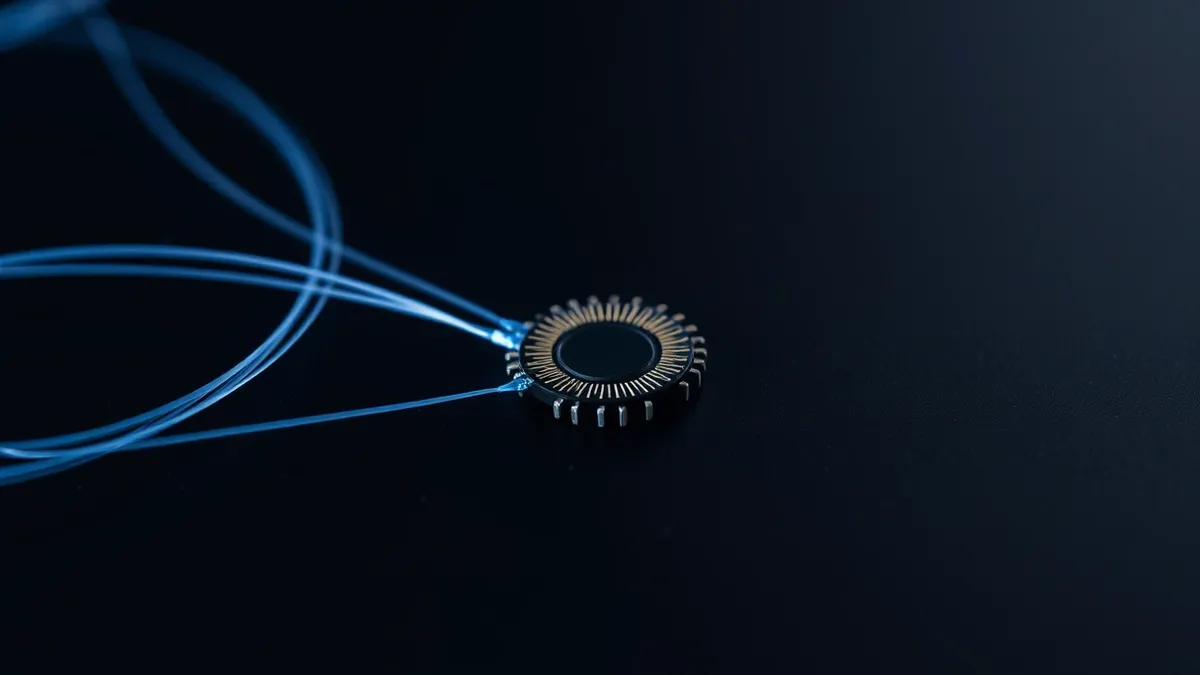
according to the published report, PsiQuantum demonstrated an eight-port optical switch with a typical signal loss of 1.2 dB during recent lab tests.reported This performance level falls well under the 3 dB threshold that standard data center optics can tolerate, suggesting a potential efficiency gain for high-bandwidth networks.reportedPsiQuantum showed a new light switch for data centers that wastes less signal than usual, which could save power for AI computers.
Evidence: reported
PsiQuantum turns its photonics know-how into an optical switch for supercharging AI data center GPU networksaifleet-tomshardware
Evidence: reported
PsiQuantum turns its photonics know-how into an optical switch for supercharging AI data center GPU networksaifleet-tomshardware
The announcement
PsiQuantum announced in a release earlier this week that it has adapted its low-loss silicon photonics technology for use in AI data centers. The prototype operates as an all-optical switch, meaning it passes light directly from fiber to fiber without converting signals to electrical form. This approach eliminates the power consumption and latency associated with regular packet switches that perform conversions at every network hop.
The context
Data center switches typically incur light loss measured in decibels, with standard equipment tolerating up to 3 dB, which represents half the light being lost.reported PsiQuantum’s device achieves its 1.2 dB loss rate without requiring an amplifier.reported The switch utilizes circuits etched on a silicon chip and contains no moving parts, distinguishing it from competitors like Google and Lumentum, which employ microelectromechanical systems or tiny mirrors to direct light.
Evidence: reported
PsiQuantum turns its photonics know-how into an optical switch for supercharging AI data center GPU networksaifleet-tomshardware
Evidence: reported
PsiQuantum turns its photonics know-how into an optical switch for supercharging AI data center GPU networksaifleet-tomshardware
Reading between the lines
The primary advantage of optical circuit switches is maintaining a fixed light path until a change is ordered, which reduces the overhead of constant signal conversion. As AI clusters grow, moving data between GPUs becomes a bottleneck, making high-bandwidth optical solutions more critical than copper alternatives. However, the current prototype is small, featuring only eight inputs and outputs, whereas competitors offer devices with 32 to 300 ports.
The business case
For AI platform architects, reducing signal loss to 1.2 dB could lower the need for amplification, thereby cutting power costs in large GPU clusters.reported PsiQuantum’s silicon-based approach avoids the mechanical wear of mirror-based switches, potentially improving reliability. However, the eight-port limit currently restricts its use in large-scale deployments compared to rivals like Salience Labs and Lumentum. Vendor choice may depend on whether PsiQuantum can scale its port density while maintaining low loss.
Evidence: reported
PsiQuantum turns its photonics know-how into an optical switch for supercharging AI data center GPU networksaifleet-tomshardware
Why it matters
- Lower signal loss reduces the power required for signal amplification, directly impacting operational costs in dense AI clusters.
- Silicon photonics without moving parts may offer higher durability than MEMS-based switches used by competitors like Google and Lumentum.
- The eight-port prototype limits immediate adoption for large-scale GPU interconnects, requiring architects to monitor development of larger devices.
- Avoiding electrical-to-optical conversion at every hop can reduce latency, a critical factor for distributed AI training workloads.
Topics: photonics, data centers, AI infrastructure, PsiQuantum, optical switches
Updated
Then / now / next
Data center optics typically tolerated up to 3 dB of signal loss, requiring amplification to maintain signal integrity over distances.
PsiQuantum has demonstrated an eight-port silicon photonic switch that loses only 1.2 dB without amplification or moving parts.
The company states that larger devices with more ports are in development, which will determine its viability for large AI clusters.
Story timeline
- Then Data center optics typically tolerated up to 3 dB of signal loss, requiring amplification to maintain signal integrity over distances.
- 30 Oct 2026 PsiQuantum turns its photonics know-how into an optical switch for supercharging AI data center GPU networks
- Now PsiQuantum has demonstrated an eight-port silicon photonic switch that loses only 1.2 dB without amplification or moving parts.
- Next The company states that larger devices with more ports are in development, which will determine its viability for large AI clusters.
The strongest doubt
Counterpoint from the sources
The eight-port prototype is significantly smaller than competitors’ devices, which range from 32 to 300 ports, limiting its immediate applicability in large-scale data centers.
Ask the article
Local keyword search of this article; no generated answers.Did this article give you the evidence you needed?
Your choice stays on this device. No public tally.Questions readers ask
How does PsiQuantum’s switch loss compare to industry standards?
PsiQuantum’s switch loses 1.2 dB of signal, which is less than half the 3 dB loss tolerance typical for data center optics.
What is the main technical difference between this switch and competitors?
PsiQuantum uses a silicon chip with no moving parts, whereas competitors like Google and Lumentum use microelectromechanical systems with tiny mirrors.
Is this switch ready for large-scale data center deployment?
No, the current prototype has only eight ports, while competitors offer switches with 32 to 300 ports, though larger devices are in development.
Connected stories
Reading receipt
- PsiQuantum’s eight-port optical switch loses only 1.2 dB of signal in lab tests, significantly below the 3 dB tolerance typical of data center optics.
- The device uses silicon photonics without moving parts or amplifiers, unlike competitors’ MEMS-based switches that rely on tiny mirrors.
- While the prototype handles fewer ports than rivals, the company states larger versions are in development to address scale requirements.
Still open: Will PsiQuantum’s larger switches maintain the 1.2 dB loss rate as port counts increase?
Still open: How will the cost of silicon photonic switches compare to existing MEMS-based solutions at scale?